

Partner
Paul P. Marchese
A trusted counselor to North Shore families for more than three decades, Paul guides clients through estate planning, trusts, and probate with the patience and precision that complex family wealth demands.
Read full bio
Marchese & Maynard, LLP represents executors and administrators settling estates in Manhasset and throughout Nassau County, handling probate administration, asset collection, creditor claim review, and beneficiary distributions. Our attorneys guide families through Surrogate's Court filings, tax compliance, and executor duties while addressing the procedural and emotional challenges that arise during estate settlement.
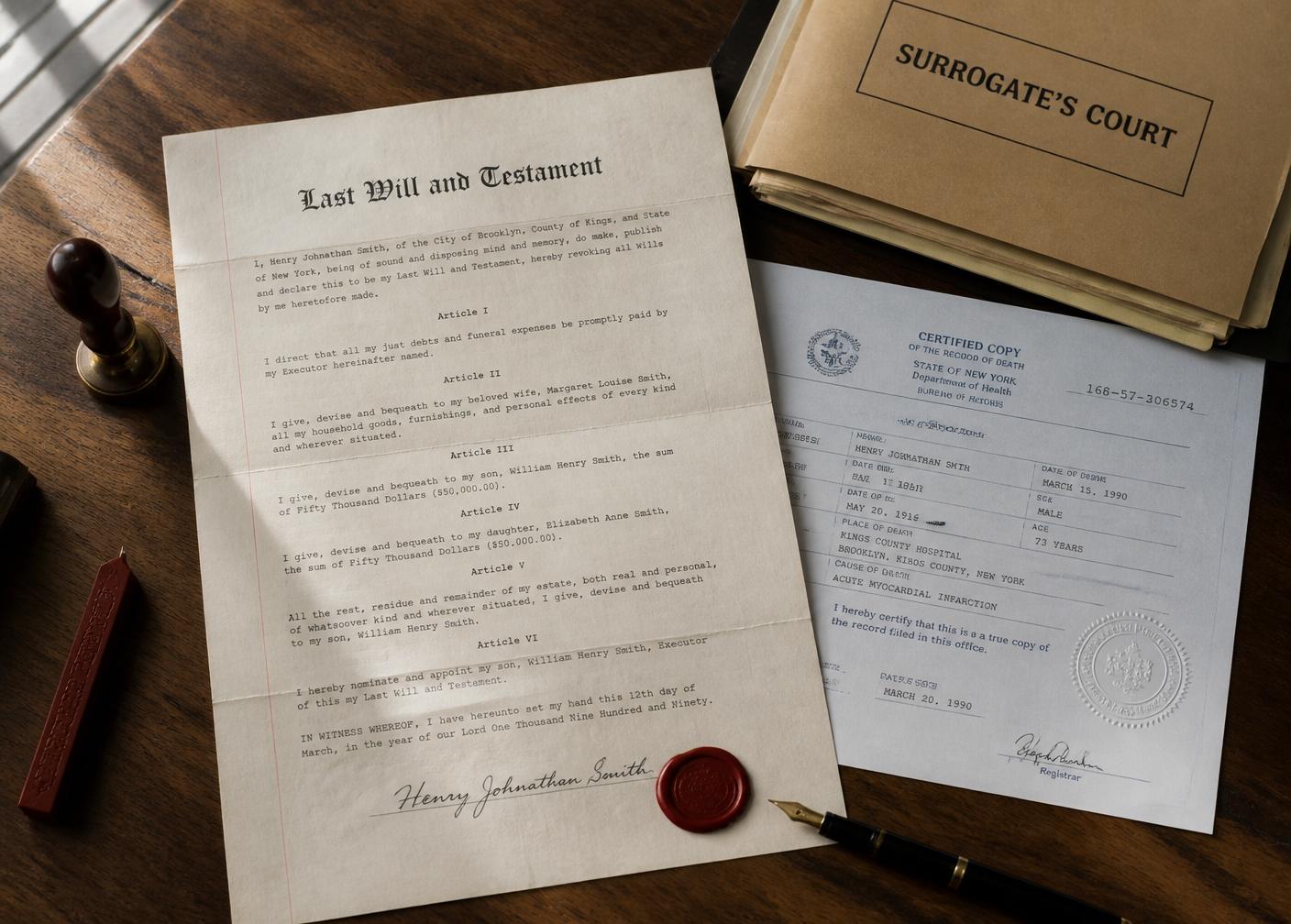
Estate administration in Nassau County involves court filings, tax deadlines, and fiduciary duties that executors cannot ignore. Mistakes can create personal exposure and delay distributions to grieving families.

Anyone who has ever received a certified letter from Surrogate's Court and felt their stomach drop knows the moment. The envelope sits unopened because the language inside will be dense, the deadlines will be tight, and nobody explained what happens if you miss one.
The failure that surfaces most often is not missing a filing deadline but making an irrevocable tax election without understanding what it forecloses. Executors who distribute assets before creditor exposure, taxes, and administration costs are evaluated may lose important statutory protection if a valid claim appears later.

Before committing to this, one thing is worth saying plainly: the executor who distributes assets before the seven-month creditor period runs may lose statutory protection for good-faith distributions if a creditor later presents a valid claim. We have watched executors who followed the will perfectly still face disputes because they moved too fast on distributions and left no reserve for a claim that surfaced during administration.
The boundary between a clean estate settlement and years of personal exposure often turns on one variable: whether the fiduciary maintained a detailed asset inventory from day one or tried to reconstruct it later from bank statements and memory. Everything else, Letters timing, waiver collection speed, and tax filing deadlines, becomes harder when the estate records are incomplete.

Real property transfers can require Letters, title review, lien resolution, and applicable estate-tax documentation before a buyer or beneficiary can receive clean title. Requirements vary based on the asset, how title was held, and whether a release of estate tax lien is needed.
Two partners. One standard of care. Every plan is drafted, reviewed, and signed under their direct guidance.
A trusted counselor to North Shore families for more than three decades, Paul guides clients through estate planning, trusts, and probate with the patience and precision that complex family wealth demands.
Read full bio
Robin brings decades of experience and a client-centered approach to elder law, Medicaid planning, and guardianship matters, advocating for families during the most consequential transitions of their lives.
Read full bio“Robin and Paul walked our family through a trust restructure after my father's stroke. They explained every clause in plain language and the Nassau County Surrogate filings closed without a single delay.”
“We finally have a real estate plan, not a binder collecting dust. The team made sure our co-op shares were actually transferred into the trust. Worth every minute of the consultation.”
“After two other attorneys gave us conflicting Medicaid advice, Marchese and Maynard laid out the lookback timeline on paper and built a plan that protected our home. Calm, precise, and patient.”
“Probate could have been a nightmare. They handled the executor paperwork, creditor notices, and a contested distribution without us ever having to argue with family. Genuine pros.”
“Paul drafted our wills, healthcare proxies, and powers of attorney in a single afternoon, and the bank accepted the POA without a single follow up call. That alone tells you they know what they are doing.”
“Trusted, local, and responsive. Robin took my call on a Friday afternoon when I was panicking about my mother's nursing home admission. By Monday we had a clear plan and the right documents in motion.”
Estate administration at Marchese & Maynard, LLP begins with the petition for Letters Testamentary or Letters of Administration and ends when estate obligations are resolved and assets are distributed. Between those bookends are inventorying every account, deed, and titled asset; identifying interested parties; reviewing creditor claims presented to the estate; preparing required federal and state filings; managing liquid reserves; resolving disputes over interpretation or valuation; and executing transfers that satisfy both the will and applicable law.
The work is sequential. Skipping steps can create liability. Our attorneys in Manhasset handle each phase in the order Nassau County Surrogate's Court expects it.
New York generally uses a statutory commission schedule for executors and administrators under the Surrogate's Court Procedure Act. The calculation is generally based on money and property received and paid out by the fiduciary, subject to statutory rules, estate circumstances, and the terms of any will.
Attorney fees are separate from fiduciary commissions. The overall cost can depend on the estate's assets, tax work, title issues, disputes, business interests, and whether the matter requires a judicial accounting.
Fiduciaries should not assume commissions can be taken immediately or without documentation. Advance commissions and final compensation can involve statutory procedures, court approval, beneficiary consent, or accounting requirements depending on the estate.
Estate administration is the legal process of collecting a decedent's assets, addressing valid creditor claims, filing required tax returns, and distributing property to beneficiaries. Complexity depends on asset type, creditor activity, and whether real property requires title work.
Estate administration is the formal process through which an executor or administrator marshals a decedent's assets, satisfies outstanding obligations, and transfers property to the people or entities entitled to receive it. The work begins when Surrogate's Court issues Letters Testamentary or Letters of Administration, granting legal authority to act on behalf of the estate.
An administrator appointed by Surrogate's Court operates under a statutory distribution framework that dictates who receives what. The administrator collects assets, pays creditors, files required tax returns, and distributes what remains to heirs in the order New York law prescribes.
Personal preference plays no role. We represent beneficiaries who need to verify that distributions match the statutory schedule and fiduciaries who need protection from claims that they distributed incorrectly or prematurely.
There is no single two-year rule that applies to every estate after death. Different deadlines apply to creditor claims, tax returns, fiduciary accountings, and estate administration depending on the facts.
For federal estate-tax portability, Form 706 is generally due nine months after death, with a potential six-month extension. Certain estates that are not otherwise required to file a federal estate-tax return may qualify for a simplified late-portability election filed by the fifth anniversary of death.
The seven-month SCPA 1802 creditor period is separate. It begins when Letters are first issued by Surrogate's Court, not on the date of death and not when any notice is mailed. Marchese & Maynard, LLP reviews the estate's actual deadlines during intake so fiduciaries can make informed decisions before distributions occur.
Marchese & Maynard, LLP serves families throughout Manhasset and surrounding Nassau County communities, providing estate administration guidance directly at clients' homes or preferred meeting locations. From Great Neck to Port Washington, the team reaches North Shore families via Northern Boulevard, the Long Island Expressway, and Shelter Rock Road. We coordinate Letters Testamentary filings, asset marshaling, and creditor claim review for Nassau County Surrogate's Court matters without requiring families to travel during an already difficult time.
Initial consultations typically occur within one week of contact, with document review and petition preparation beginning once the family provides the death certificate, will, and available asset statements.
Service area coverage
Free Consultation
Tell us a little about your situation, and we will reach out within one business day.
Your initial meeting is structured to complete a full asset inventory and goals discovery in a single, unhurried session.
Confidential and no obligation.