Estate Administration
Estate Administration in Manhasset for Executors Navigating Surrogate's Court
Letters Testamentary, asset marshaling, creditor claim review, and tax coordination on the timeline Surrogate's Court expects.

Marchese & Maynard, LLP guides executors and families through probate court filings, asset marshaling, and estate settlement in Nassau County Surrogate's Court. Our attorneys handle Letters Testamentary applications, creditor claims, executor duties, and final distributions under New York estate law.
Our attorneys guide Nassau County executors through Surrogate's Court filings, asset marshaling, and creditor claim review while coordinating property transfers that close without title defects. Each area below links to the deeper page on how the work gets done.
Letters Testamentary, asset marshaling, creditor claim review, and tax coordination on the timeline Surrogate's Court expects.

Full court representation for complex estates: NYSCEF filings, executor liability protection, and clean title transfers.
Executors who distribute assets before the seven-month period from the issuance of Letters may lose statutory protection for good-faith distributions against claims presented later. We review claims against estate records, request written claim documentation and verification when appropriate, and hold reserves for disputed or unresolved amounts before final distribution.
Before committing to this, one thing is worth saying plainly: the process does not pause for family disagreements or missing documents. We have watched estates stall for months because one beneficiary refused to sign waivers or because the original will sat in a safe deposit box nobody could access without court intervention.
Not every Nassau County estate requires a full probate proceeding. A Voluntary Administration under SCPA Article 13 may be available when the estate has $50,000 or less in personal property and no authority is needed to administer real property. A $30,000 bank account may fit that limited process, while a Manhasset home, condo, co-op interest, or other real property can require a different Surrogate's Court path.
The will names an executor. The trust was funded five years ago. The power of attorney is notarized and filed. Then the person dies, and we discover the IRA beneficiary form was never updated after the divorce, the co-op shares were never retitled, and the safe deposit box nobody mentioned holds stock certificates from 1987.
If you have ever opened a filing cabinet after a funeral and found three different versions of the same document with three different dates and no idea which one controls, you already understand why estate administration exists. The plan assumed everything would be where it should be. The work begins when it is not.
Most probate work in Nassau County involves families who paid for estate plans but never finished the asset retitling, beneficiary updates, and coordination that make those plans functional.
Two partners. One standard of care. Every plan is drafted, reviewed, and signed under their direct guidance.

A trusted counselor to North Shore families for more than three decades, Paul guides clients through estate planning, trusts, and probate with the patience and precision that complex family wealth demands.
Read full bio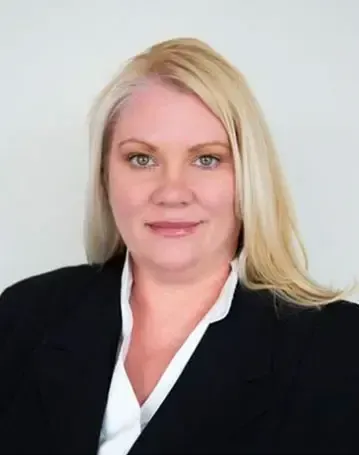
Robin brings decades of experience and a client-centered approach to elder law, Medicaid planning, and guardianship matters, advocating for families during the most consequential transitions of their lives.
Read full bio“Robin and Paul walked our family through a trust restructure after my father's stroke. They explained every clause in plain language and the Nassau County Surrogate filings closed without a single delay.”
“We finally have a real estate plan, not a binder collecting dust. The team made sure our co-op shares were actually transferred into the trust. Worth every minute of the consultation.”
“After two other attorneys gave us conflicting Medicaid advice, Marchese and Maynard laid out the lookback timeline on paper and built a plan that protected our home. Calm, precise, and patient.”
“Probate could have been a nightmare. They handled the executor paperwork, creditor notices, and a contested distribution without us ever having to argue with family. Genuine pros.”
“Paul drafted our wills, healthcare proxies, and powers of attorney in a single afternoon, and the bank accepted the POA without a single follow up call. That alone tells you they know what they are doing.”
“Trusted, local, and responsive. Robin took my call on a Friday afternoon when I was panicking about my mother's nursing home admission. By Monday we had a clear plan and the right documents in motion.”
Probate refers to the court proceeding in Nassau Surrogate's Court that authenticates the will and issues Letters Testamentary. Estate administration is everything that happens after those letters are granted. We inventory accounts, review creditor claims, prepare tax filings, obtain releases, and distribute assets according to the will or intestacy rules. Probate opens the door. Administration is the work that closes the estate and transfers property to beneficiaries.
For smaller estates, Voluntary Administration may be available instead of a full probate proceeding when the estate has $50,000 or less in personal property and no real property requires administration. The correct path depends on the asset list, ownership records, and whether a will exists.
Whether probate is required depends entirely on how assets were titled at death. A will sitting in a drawer does not trigger probate. Assets do. If real property, brokerage accounts, or bank accounts remain in the decedent's individual name, the estate may need a Surrogate's Court proceeding to transfer legal authority. The will names who receives those assets, but it does not move them. That requires Letters Testamentary when probate is the required path.
Conversely, assets with beneficiary designations, payable-on-death instructions, or joint tenancy with rights of survivorship pass outside probate regardless of what the will says. A Voluntary Administration may be an option for estates with $50,000 or less in personal property, but that limited process does not administer real property.
Families often assume a will eliminates probate. It does not. The will controls distribution during probate, but titling controls whether probate happens at all. We assess each asset's registration to determine the required path and whether court involvement can be avoided through existing designations.
Assets titled solely in the decedent's name without beneficiary designations or transfer mechanisms may require probate or another Surrogate's Court proceeding. Jointly held property, beneficiary accounts, and properly funded trusts typically avoid it, though registration errors often override intent.
Probate captures anything titled in the decedent's individual name at death without an automatic transfer mechanism. Real property deeded solely to the deceased, bank accounts without payable-on-death designations, brokerage accounts held individually, personal property like vehicles or collectibles, and business interests registered to the person alone may require court supervision to retitle.
Whether a bank account enters probate depends entirely on how the account was registered at the time of death. Accounts titled solely in the decedent's name may require administration through Nassau Surrogate's Court. Joint accounts with rights of survivorship typically transfer directly to the surviving account holder. Payable-on-death or transfer-on-death designations allow the named beneficiary to claim the funds outside probate.
For an estate with $50,000 or less in personal property and no real property requiring administration, a Voluntary Administration may be available. At Marchese & Maynard, LLP, we review each account's registration and beneficiary forms to determine which assets require court oversight and which pass by operation of the account contract itself.
Not every death requires probate. The determining factor is how assets were titled at the moment of death. If a bank account names a payable-on-death beneficiary, that account transfers directly without court involvement. If real property is held as joint tenants with right of survivorship, the surviving owner takes title by operation of law. If a brokerage account lists a transfer-on-death designation, the named party receives the funds outside probate.
For estates with $50,000 or less in personal property and no real property requiring administration, a Voluntary Administration may provide a limited alternative to full probate or administration. Marchese & Maynard, LLP reviews the specific registration of each asset to determine what requires court administration and what does not.
We encounter estates where ninety percent of the value passes outside probate because accounts were registered correctly, and only a single asset requires court filing. We also see estates where every account, deed, and investment requires Nassau Surrogate's Court involvement because nothing was coordinated during life.
Marchese & Maynard, LLP serves families throughout Manhasset and surrounding Nassau County communities, providing probate and estate administration guidance directly at clients' homes or through secure remote consultation. From Great Neck to Roslyn, Port Washington to Garden City, our team reaches executors and beneficiaries across the North Shore via Northern Boulevard, the Long Island Expressway, and local Nassau County routes. We coordinate Letters Testamentary filings, asset marshaling, and creditor claim review on timelines that reflect Nassau Surrogate's Court processing windows, not generic state averages.
Service area coverage
Free Consultation
We meet families in Manhasset, at home, or by video, whichever keeps the estate moving without adding stress.